

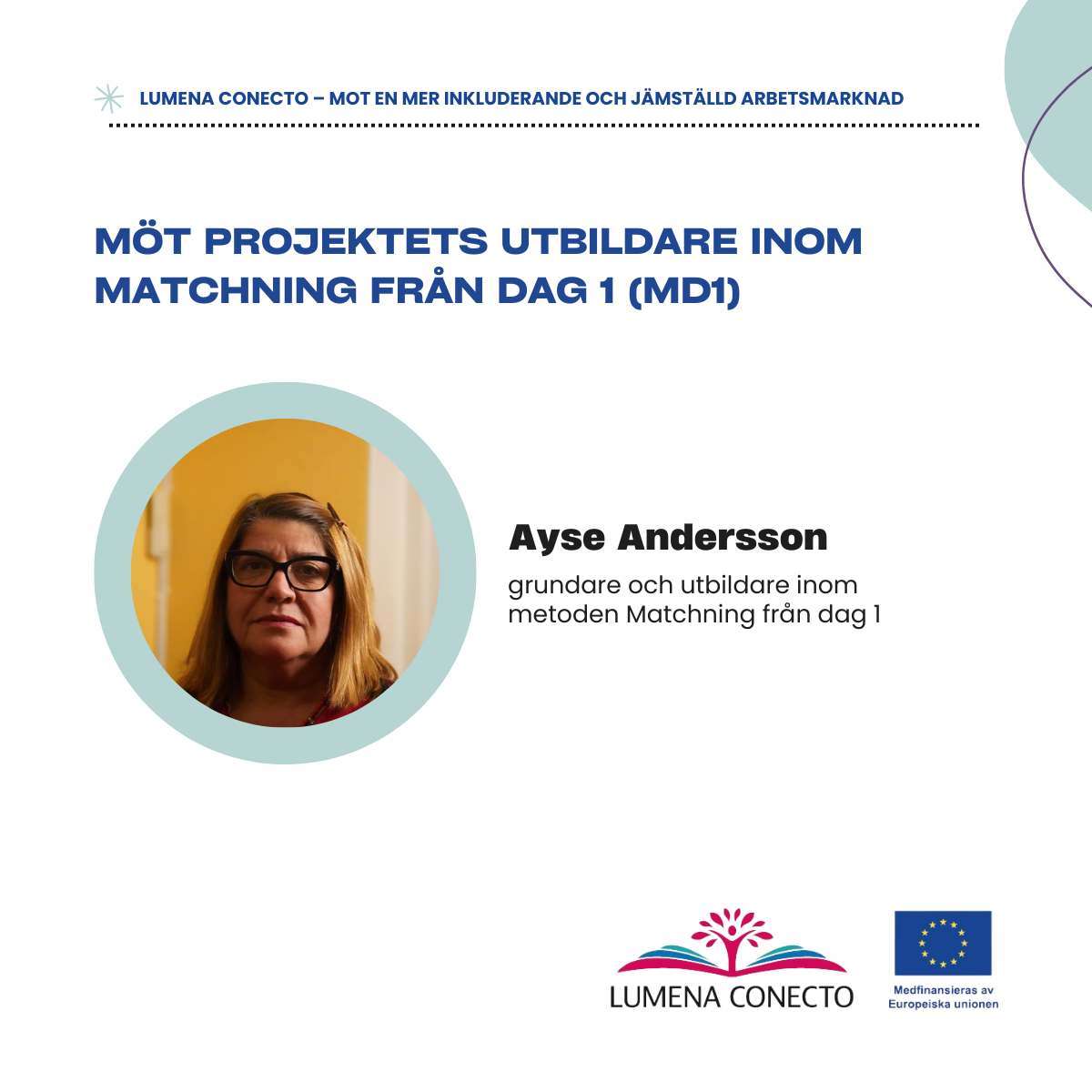
- Can you briefly describe your mission and what inspired you to develop the methodology Matching from day 1?
The inspiration for Matching from day 1 is based on an empirical analysis of how jobseekers act in their attempts to establish themselves in the labour market and how employers successfully fill vacancies. Through a systematic examination of both jobseekers' strategies and employers' recruitment patterns, recurrent factors characterising successful matches were identified. On the basis of these observations, the behavioural patterns that were found to generate the greatest outcomes were operationalised, with a particular focus on jobseekers who have difficulties establishing themselves on their own in the labour market.
My mission was to develop a method that could streamline the establishment in the labour market for job seekers, especially for those who have difficulty establishing themselves on their own.
- What are the main strengths of the method compared to traditional approaches to matching?
The main strength of Matching from day 1 is the shift in perspective: starting from jobseekers to employers instead of the other way round. The approach focuses on all matchable jobseekers who are motivated to take a job here and now and prioritises filling vacancies with those most in need of support. In addition, it emphasises learning that takes place outside school and work and verified skills. On the surface, this may seem like a minor change, but in practice it represents a complete shift in thinking from traditional matching methods, making it more inclusive and effective.
- What are the main lessons learnt from MD1that you think people can take with them and use in their work in the future?
The main lessons learnt from Matching from day 1 is that methodological fidelity and outcomes need to be closely monitored and that governance is crucial. Achieving sustainable results requires that leaders have an in-depth knowledge of the methodology and can ensure that it is applied consistently at all stages. This means that leadership needs not only to understand the basic principles of the methodology, but also to actively work to prevent a return to traditional ways of working.
- What do you see the outcome could be - for both jobseekers and employers - if you work consistently with MD1?
When applied consistently, Matching from Day 1 increases the chances of jobseekers finding a job faster, as it ensures that all matchable candidates are connected to vacancies early on. The method is impact-tested and has shown good results.
For employers, it means a reliable recruitment channel where skills are matched to their needs, leading to the same employers coming back and using us again. Jobseekers' satisfaction is measured by their experience, whether or not they get a job, and shows positive results when they feel their skills and attributes are utilised.
- What is your main message to organisations that want to work more employer-oriented and implement MD1in practice?
The most important thing is to be methodological - to really follow all the steps of Matching from day 1 without falling back into traditional ways of working. Success also requires clear governance and systematic follow-up. Management needs to ensure that the method is used correctly and continuously monitor the results, otherwise there is a risk of losing both impact and confidence among employers and jobseekers.
 EN
EN  SV
SV  FI
FI  ES
ES  AR
AR  TR
TR