
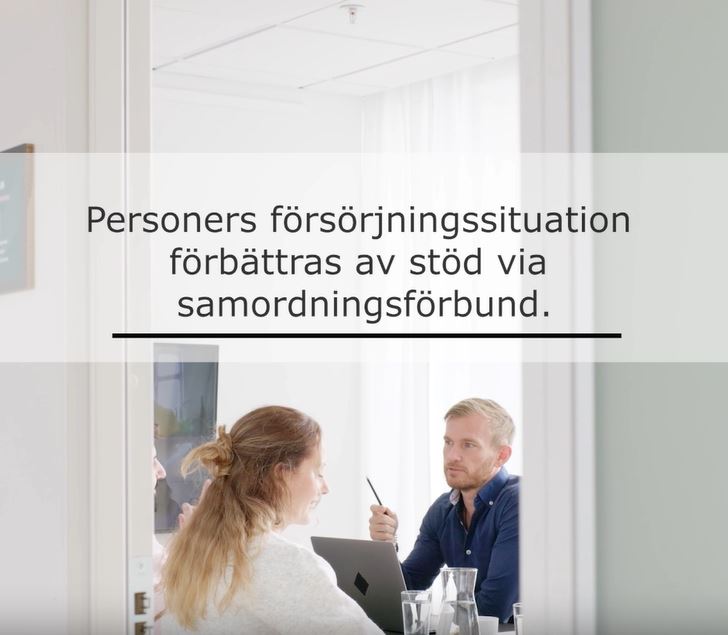
A new report from the Swedish Social Insurance Inspectorate (ISF) shows that coordinated efforts through coordination associations improve the livelihood of individuals with a weak position in the labour market. The report is the third in a series of reports conducted by the Social Insurance Inspectorate.
The evaluation is based on data from the coordination associations of Gothenburg, Insjölandet and Stockholm between 2019 and 2021. ISF has followed the participants for up to 4.5 years via register data to analyse long-term effects.
The results show that coordinated support:
- Leads to higher wage income and reduced dependence on social assistance.
- Sick leave decreases and more people receive sickness benefits
- Demonstrates positive effects on studies and increases study opportunities
- Women in particular benefit financially.
The evaluation shows that collaboration between the Social Insurance Agency, the Public Employment Service, the municipalities and the regions can improve the livelihood situation of people who need coordinated rehabilitation and who have been wholly or partially absent from the labour market for a long time. This is a benefit both for the people who benefit from coordinated rehabilitation and for society as a whole.
All of ISF's impact evaluations show that the team efforts financed by the coordination associations are more effective than the support provided by the authorities individually for people with complex problems who are far from the labour market. Coordinated support has led to increased well-being and confidence in the future, increased self-sufficiency, reduced income support and a reduction in the proportion of people on sick leave
”Overall, our evaluation shows that coordinated support can make a big difference for people who need coordinated rehabilitation and who are far from the labour market.”
 EN
 SV
 FI
 ES
 AR
 TR